

Why Unlaquered Brass is the Most Beautiful Finish in Your Kitchen
There is a moment, usually about 3 - 6 months after installation, when unlaquered brass reveals its true character.
The faucet you installed in its shiny finish begins to shift. Subtle darker tones appear near the base. The handles develop a soft, lived-in depth. The finish starts telling the story of your kitchen, your water, your hands. This is patina. And it is the most beautiful thing that can happen to a kitchen fixture.
What Makes Unlacquered Brass Different
Most brass fixtures on the market are lacquered — coated with a protective layer that prevents the finish from developping. It sounds appealing in theory but in practice, lacquer chips, peels, and scratches over time, leaving an uneven, artificial-looking surface that cannot be repaired without stripping the whole fixture.
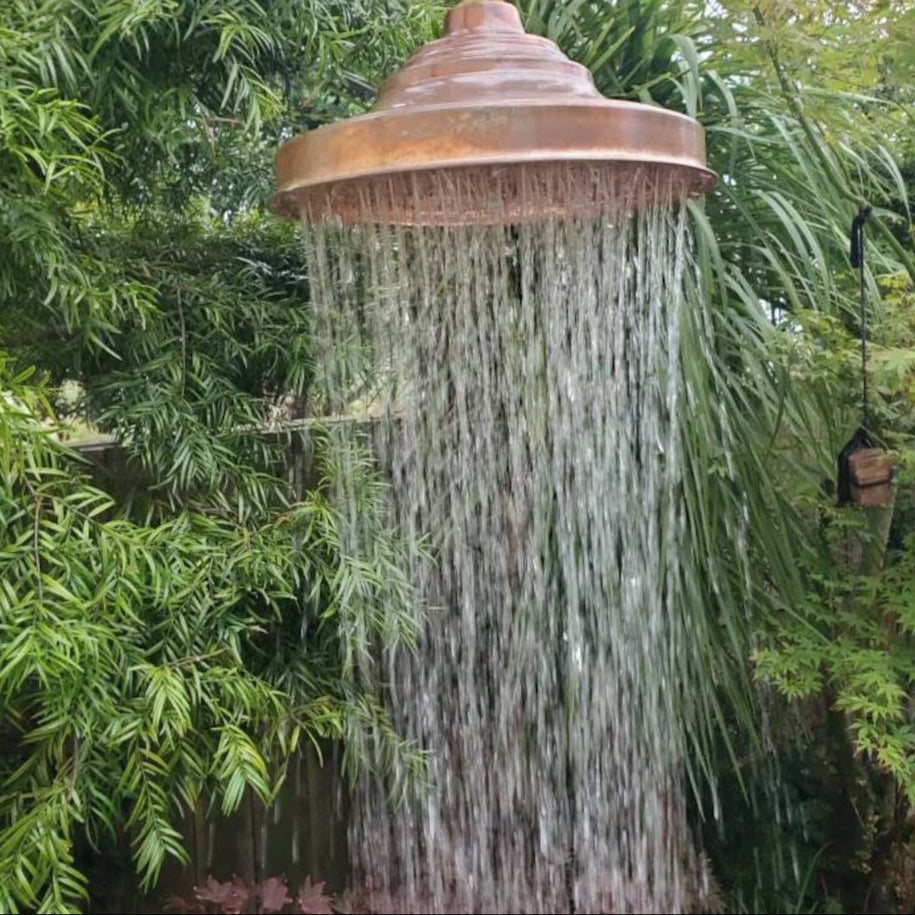
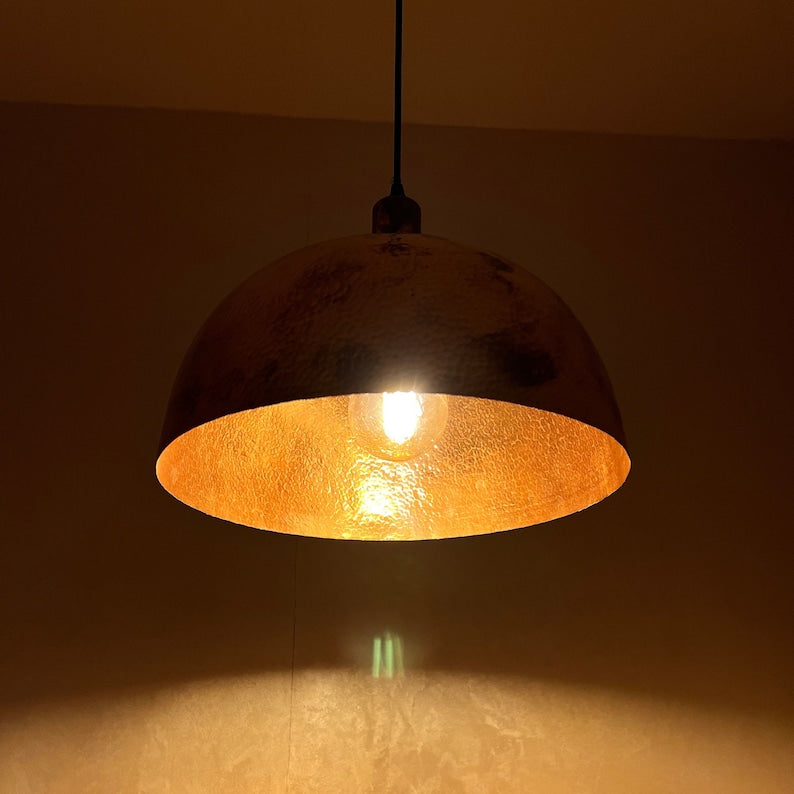
Unlacquered brass has no such coating. It is raw, living metal that reacts naturally with its environment. Water minerals, air, and touch all contribute to its evolving appearance. The result over time is a rich, complex surface that no factory finish can replicate — and no two fixtures age exactly the same way, unlacquered brass cabinet pulls ages differently than faucets.
The Kitchen is Where Brass Belongs
 Of all the rooms in a home, the kitchen is where unlacquered brass shines brightest. Here is why:
The warm golden tones of brass complement natural materials like wood, stone, and marble better than any other metal finish. Where chrome can feel cold and clinical, and matte black can feel heavy, brass brings warmth and light without overpowering the space.
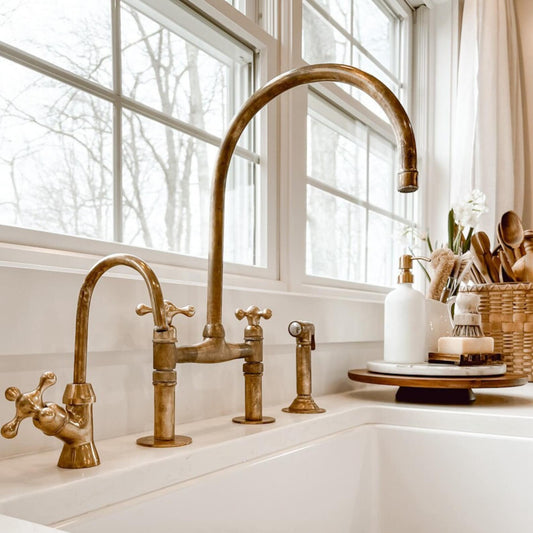
Bridge faucets in unlacquered brass, with their cross handles and curved spouts, instantly anchor a kitchen with a sense of history and intention. Every aspect gives deep details to the space.
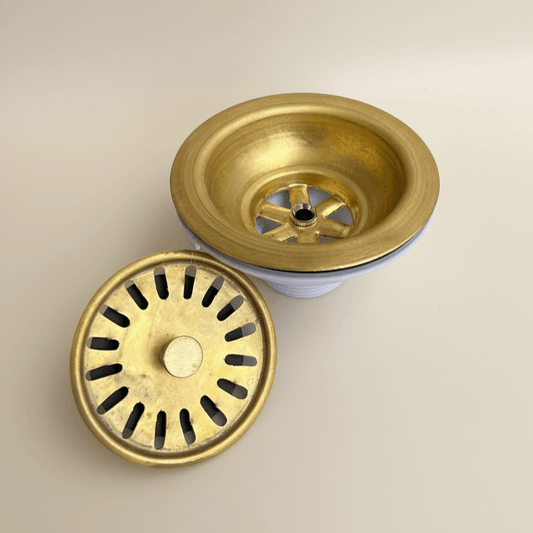
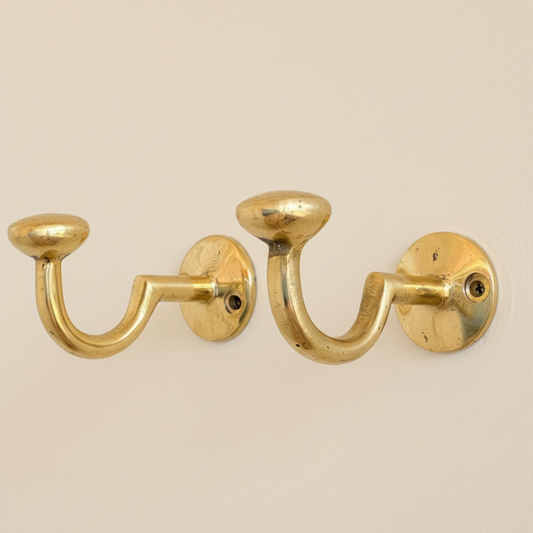
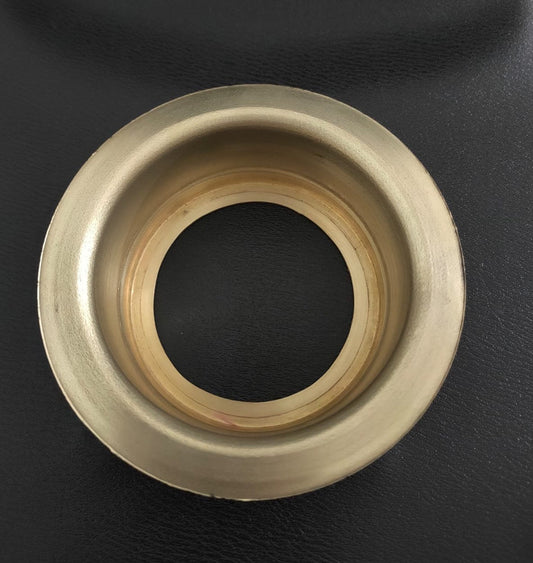
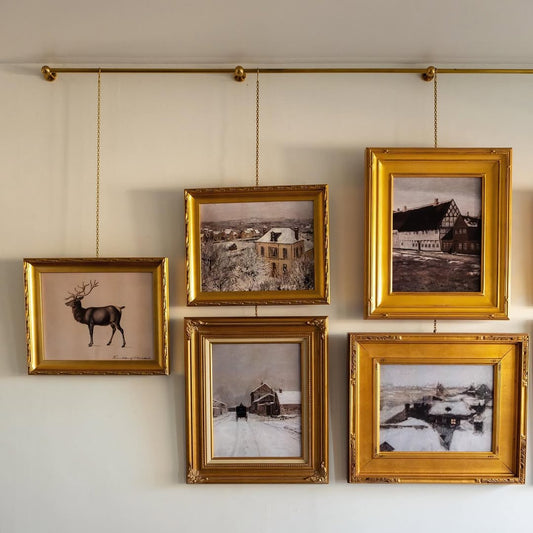
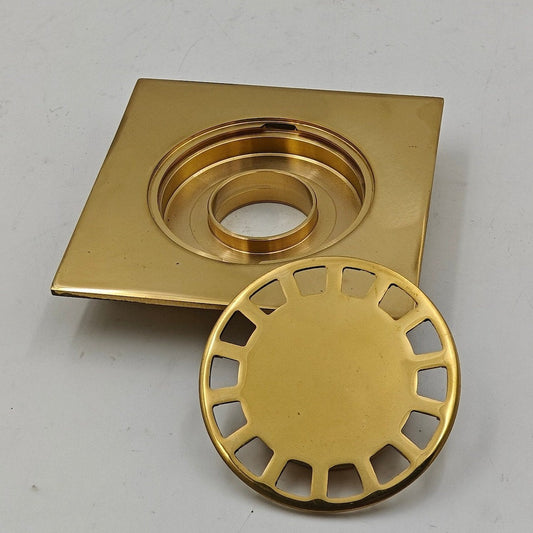
Pot fillers, cabinet pulls, hooks, and drain covers in matching unlacquered brass create a cohesive design language throughout the kitchen that feels collected and curated rather than mass-produced.
Unlacquered Brass and the Vintage Kitchen Trend
The return of vintage and Victorian kitchen aesthetics is not a passing trend. Homeowners and interior designers are increasingly rejecting the cold, minimal kitchens of the 2010s in favor of spaces that feel warm, personal, and timeless. Unlacquered brass is central to this movement.
It pairs perfectly with shaker cabinets, subway tiles, farmhouse sinks, and open shelving. It works equally well in modern kitchens as an intentional contrast — a warm, artisanal element in an otherwise contemporary space.
How to Care for Unlacquered Brass

The most common concern people have about unlacquered brass is maintenance. The reality is simpler than most expect.
For everyday cleaning, warm water and a soft cloth is all you need. For a deeper clean, a small amount of mild dish soap works well. Dry the fixture after cleaning to prevent water spots.
If you want to slow the patina process, apply a thin coat of natural wax like beeswax or Renaissance Wax every few months. If you want to embrace the patina fully, simply leave the brass alone and let time do its work.
The one thing to avoid is abrasive cleaners or steel wool, which will scratch the surface permanently.
The Long View
A well-made unlacquered brass faucet, properly cared for, will outlast almost any other finish in your kitchen. While lacquered fixtures need replacing when their coating fails, unlacquered brass simply continues to evolve. Many antique brass fixtures over a hundred years old are still in use today, more beautiful now than when they were made.
That is the promise of unlacquered brass. Not a finish that stays frozen in time, but one that grows more beautiful with every passing year.
Gallery