

Why We Chose Unlacquered Brass Faucets (And Why They Make the Kitchen Feel Alive)
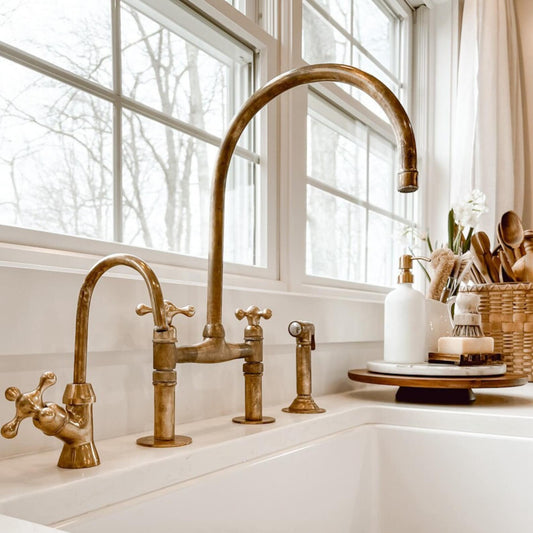
 Every time someone walks into our kitchen, they notice the faucet.
Not the cabinets. Not the countertops. The faucet.
And the first question is almost always the same:
“Is that an antique?” But it’s not. It’s unlacquered brass. And the beauty of it is that it looks like it has lived a life, even when it’s brand new.
That’s exactly what makes it special.
As explained in your reference blog, unlacquered brass has no protective coating, which allows it to naturally darken and develop patina over time, creating an aged and worn look that many homeowners love.
What Is Unlacquered Brass, Really?
Unlacquered brass is simply raw brass with no lacquer, no sealant, and no artificial protection.
Most modern faucets are designed to look the same forever. They resist change. Unlacquered brass does the opposite. It evolves.
It reacts to air, water, and touch. It slowly darkens, softens, and develops depth. This natural transformation is called patina.
Instead of staying frozen in time, it tells a story. And that story becomes part of your home.
Why the Faucet Matters More Than You Think
The kitchen is the heart of the home. It’s where mornings begin and evenings end. It’s where you cook, clean, gather, and live.
The faucet sits at the center of it all.
Choosing unlacquered brass changes the entire feeling of the space.
It adds warmth. Authenticity. Soul.
It doesn’t look mass-produced. It looks personal.
That’s why so many people searching for vintage, farmhouse, or European-inspired kitchens choose unlacquered brass.
It doesn’t just decorate the kitchen.
It transforms it.
The Most Common Questions People Ask
If you’re considering unlacquered brass, you probably have questions. Everyone does.
Here are the most common ones.
Does unlacquered brass tarnish?
Yes. And that’s exactly the point.
Unlacquered brass will naturally tarnish over time. This is not damage. This is patina forming.
It’s what gives the faucet its character.
It’s why antique brass pieces look so beautiful decades later.
Every mark, every shade variation, every darkened area adds personality.
No two faucets age the same way.
How long does it take to develop patina?
You will start noticing changes surprisingly quickly.
Most people begin to see visible patina within about 3 weeks of daily use.
At first, it’s subtle. Slight darkening. Soft variations in tone.
Over time, it becomes richer and deeper.
Months later, the faucet no longer looks new.
It looks timeless.
Will it look uneven?
Yes.
And that’s what makes it beautiful.
Areas that are touched more often will age faster. Areas exposed to water will develop their own patterns.
This creates a natural, organic look that cannot be replicated artificially.
It feels authentic.
Can it be polished back to shiny brass?
Yes.
If you ever want the original golden shine, unlacquered brass can be polished.
But most people never do.
Because once you see the patina develop, you realize that the aged look is the real beauty.
The Moment You Realize Why People Love It
There’s a moment when you stop seeing it as a “new faucet.”
And you start seeing it as part of your home.
Guests notice it.
They ask about it.
They assume it’s antique.
And that’s when you realize—you didn’t just install a faucet.
You added character to your kitchen.
A Living Finish That Gets Better With Time
Most things wear out with age.
Unlacquered brass does the opposite.
It gets better.
It becomes warmer. Softer. More beautiful.
It reflects your home, your use, your life.
It becomes yours.
And that’s something no factory finish can replicate.
#Stories form oldenglow's clients
Gallery